Published
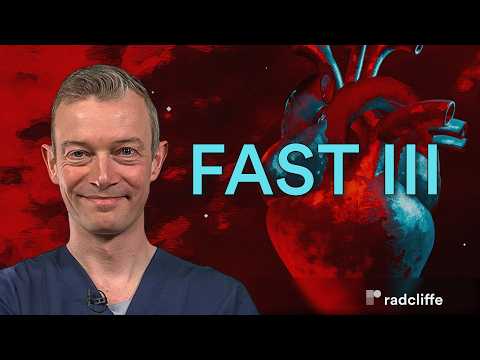
American College of Cardiology Congress 2026 - Dr Joost Daemen (Thoraxcenter, Erasmus University Medical Center, Rotterdam, NL) joins us to discuss findings from the FAST III trial (NCT04931771; ECRI) a large-scale randomised study comparing fractional flow reserve (FFR) with 3D-quantitative coronary angiography-derived vessel FFR (vFFR) to guide coronary revascularisation.
This randomised, open-label, multicentre, international non-inferiority trial enrolled 2,228 patients with intermediate coronary artery lesions across approximately 35 sites in 7 European countries. Patients were randomised 1:1 to either an FFR- or vFFR-guided revascularisation strategy with the primary endpoint of all-cause death, myocardial infarction or any revascularisation at 12 months.
At one year, findings showed that vFFR-guided revascularization was noninferior to an FFR-guided strategy in regard to the composite endpoint of death, myocardial infarction or revascularization.
Interview Questions:
1. What are the current limitations of pressure wire-based FFR in routine clinical practice and what is the rationale for exploring angiography-derived alternatives?
2.What were the aims of the FAST III trial and how was it designed?
3.What were the key findings?
4.What are the clinical implications for interventional cardiologists considering a wire-free physiology strategy?
5.What are your take-home messages for clinicians performing PCI?
6.What are the next steps for this research?
Recorded on-site at ACC.26, New Orleans.
Editor: Jordan Rance
Videographer: David Ben-Harosh
Support: This is an independent interview produced by Radcliffe Cardiology.
Visit Radcliffe Cardiology: https://www.radcliffecardiology.com/
This content is intended for healthcare professionals only.
Radcliffe brings medical knowledge, insight and innovation to life for CV clinicians around the world, using our communications & creative expertise, our platforms and connections across the community to help transform theory into practice faster.
Like us on Facebook: https://www.facebook.com/RadcliffeCardiology
Follow us on X: https://x.com/radcliffeCARDIO
This randomised, open-label, multicentre, international non-inferiority trial enrolled 2,228 patients with intermediate coronary artery lesions across approximately 35 sites in 7 European countries. Patients were randomised 1:1 to either an FFR- or vFFR-guided revascularisation strategy with the primary endpoint of all-cause death, myocardial infarction or any revascularisation at 12 months.
At one year, findings showed that vFFR-guided revascularization was noninferior to an FFR-guided strategy in regard to the composite endpoint of death, myocardial infarction or revascularization.
Interview Questions:
1. What are the current limitations of pressure wire-based FFR in routine clinical practice and what is the rationale for exploring angiography-derived alternatives?
2.What were the aims of the FAST III trial and how was it designed?
3.What were the key findings?
4.What are the clinical implications for interventional cardiologists considering a wire-free physiology strategy?
5.What are your take-home messages for clinicians performing PCI?
6.What are the next steps for this research?
Recorded on-site at ACC.26, New Orleans.
Editor: Jordan Rance
Videographer: David Ben-Harosh
Support: This is an independent interview produced by Radcliffe Cardiology.
Visit Radcliffe Cardiology: https://www.radcliffecardiology.com/
This content is intended for healthcare professionals only.
Radcliffe brings medical knowledge, insight and innovation to life for CV clinicians around the world, using our communications & creative expertise, our platforms and connections across the community to help transform theory into practice faster.
Like us on Facebook: https://www.facebook.com/RadcliffeCardiology
Follow us on X: https://x.com/radcliffeCARDIO
- Categoria
- Cardiology

Commenta per primo questo video.
Prossimo
-
09:35

PRO: Complex PCI with CTO Revascularization in pMCS Dependent Patients Should Be Routinely Offered.
-
08:38
Fast track Ortopedia Dr Banchini
-
05:12
ECG Tricks :Calculate heart rate fast !!
-
12:01
From Healthy Gut to Tumor How Fast Can Cancer Grow Inside You
-
09:18
Pro: In AMI Cardiogenic Shock, revascularization is superior to left ventricular unloading. (Debate)
-
15:00
1 Spoon a Day SHRINKS Your PROSTATE Fast | Dr. Barbara O'Neill
-
14:30
The Dark Side of Fast-Tracked Cancer Drugs
-
07:47
Fast asmr fatto male
-
19:23
???? DO THIS FOR 2 MINUTES AND YOUR PROSTATE WILL DEFLAME FAST! (DOCTORS DON’T TELL THIS!) ????
-
05:36
Why is my heart beating so fast?
-
09:07

Cardiology for Beginners: Basics of Heart Sounds and Murmurs (with examples)
-
13:45

How to Become a Cardiologist | Cardiac Electrophysiologist
-
04:14

V 00592 Cardiology Fellowship Video Dr Vranian V5
-
05:17

Cardiology Fellowship at SIU Medicine
-
04:15

Cardiology Fellowship Program at Danbury Hospital
-
05:49

Practice Question: Cardiology #1, USMLE Step 1, COMLEX Level 1
-
04:07

Dr. Muhammed Raza on advice for Fellows interested in Interventional Cardiology
-
07:36
Congenital Heart Disease – Cardiology | Lecturio
-
05:18

Cardiology Fellowship at IU School of Medicine
-
04:36

What are different types of Cardiology Tests | SPS Hospitals