Published
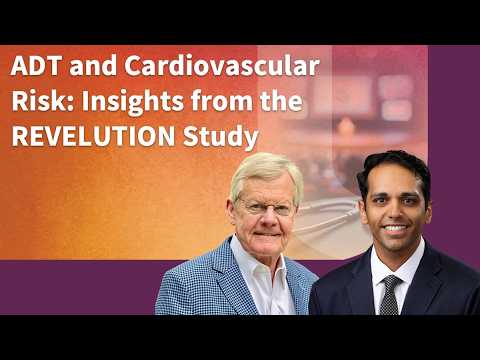
Sagar A. Patel, MD, Associate Professor, Winship Cancer Institute, Emory University, Atlanta, Georgia, presents findings from the REVELUTION trial, a randomized study designed to investigate the biologic mechanisms underlying cardiovascular risk associated with androgen deprivation therapy (ADT). He explores whether differences in cardiovascular outcomes between gonadotropin-releasing hormone agonists and antagonists are mediated through atherosclerotic plaque progression.
Using coronary computed tomography angiography, the study evaluates coronary plaque burden before and after treatment initiation. The findings demonstrate greater progression of noncalcified plaque in patients receiving GnRH agonists than in those receiving GnRH antagonists. Noncalcified plaque is identified as a vulnerable subtype associated with cardiovascular events.
Dr. Patel outlines a proposed mechanism involving immune activation through peripheral receptors and potential contributions from follicle-stimulating hormone signaling. These processes may promote macrophage activity and accelerate plaque development in patients receiving agonist therapy.
He addresses clinical implications, including the importance of cardiovascular risk awareness, limitations of current risk stratification tools, and the role of multidisciplinary collaboration. Increased use of antagonist therapy is noted due to rapid testosterone suppression and workflow advantages.
Future research includes the REVELUTION 2 study, which evaluates plaque progression in patients receiving ADT combined with second-generation androgen receptor pathway inhibitors.
Don't forget to join the GRU Community: https://grandroundsinurology.com/register/
Follow us on Twitter/X: https://x.com/GRUrology
And like and subscribe to us here on YouTube!
#ProstateCancer #ADT #CardioOncology #RadiationOncology #Urology
Using coronary computed tomography angiography, the study evaluates coronary plaque burden before and after treatment initiation. The findings demonstrate greater progression of noncalcified plaque in patients receiving GnRH agonists than in those receiving GnRH antagonists. Noncalcified plaque is identified as a vulnerable subtype associated with cardiovascular events.
Dr. Patel outlines a proposed mechanism involving immune activation through peripheral receptors and potential contributions from follicle-stimulating hormone signaling. These processes may promote macrophage activity and accelerate plaque development in patients receiving agonist therapy.
He addresses clinical implications, including the importance of cardiovascular risk awareness, limitations of current risk stratification tools, and the role of multidisciplinary collaboration. Increased use of antagonist therapy is noted due to rapid testosterone suppression and workflow advantages.
Future research includes the REVELUTION 2 study, which evaluates plaque progression in patients receiving ADT combined with second-generation androgen receptor pathway inhibitors.
Don't forget to join the GRU Community: https://grandroundsinurology.com/register/
Follow us on Twitter/X: https://x.com/GRUrology
And like and subscribe to us here on YouTube!
#ProstateCancer #ADT #CardioOncology #RadiationOncology #Urology
- Categoria
- Cardiology

Commenta per primo questo video.
Prossimo
-
06:22

Can Flax Seeds Reduce Risk Of Breast Cancer? | Functional Medicine Insights
-
16:43
Cardio-Oncology: Minimizing Cardiovascular Risk in Cancer Treatment
-
15:41
Revolutionizing Breast Cancer Treatment: Insights from Dr. Jyoti Wadhwa on Precision Oncology
-
18:19
Patrick Moran's Insights on Botanical Medicine and Oncology and Revolutionizing Cancer Treatment
-
04:15
Evaluation of cardiovascular risk factors during pregnancy a multicenter study on 222 cases in Daka
-
11:36
Treatment of Prostate Cancer: Risk Assessment in Black Men with Dr. Adam Murphy
-
06:51
Prostate Cancer Genetic Risk: What the PATROL Study Reveals
-
05:51
New Study: Enhanced Telehealth for Prostate Cancer Patients
-
04:19
War and Cancer: Insights from Integrative Oncology Study - Healing Amid Conflict
-
12:42
Sometimes the Best Treatment for Prostate Cancer Is No Treatment
-
09:07
Cardiology for Beginners: Basics of Heart Sounds and Murmurs (with examples)
-
13:45
How to Become a Cardiologist | Cardiac Electrophysiologist
-
04:14

V 00592 Cardiology Fellowship Video Dr Vranian V5
-
05:17

Cardiology Fellowship at SIU Medicine
-
04:15

Cardiology Fellowship Program at Danbury Hospital
-
05:49

Practice Question: Cardiology #1, USMLE Step 1, COMLEX Level 1
-
04:07

Dr. Muhammed Raza on advice for Fellows interested in Interventional Cardiology
-
07:36
Congenital Heart Disease – Cardiology | Lecturio
-
05:18

Cardiology Fellowship at IU School of Medicine
-
04:36

What are different types of Cardiology Tests | SPS Hospitals